Black Elderberry Benefits: What Makes Sambucus Nigra Different
Black elderberry is one of the most familiar forms of elderberry found in modern wellness products. But what exactly is black elderberry, and what makes Sambucus nigra different from other elderberry varieties?
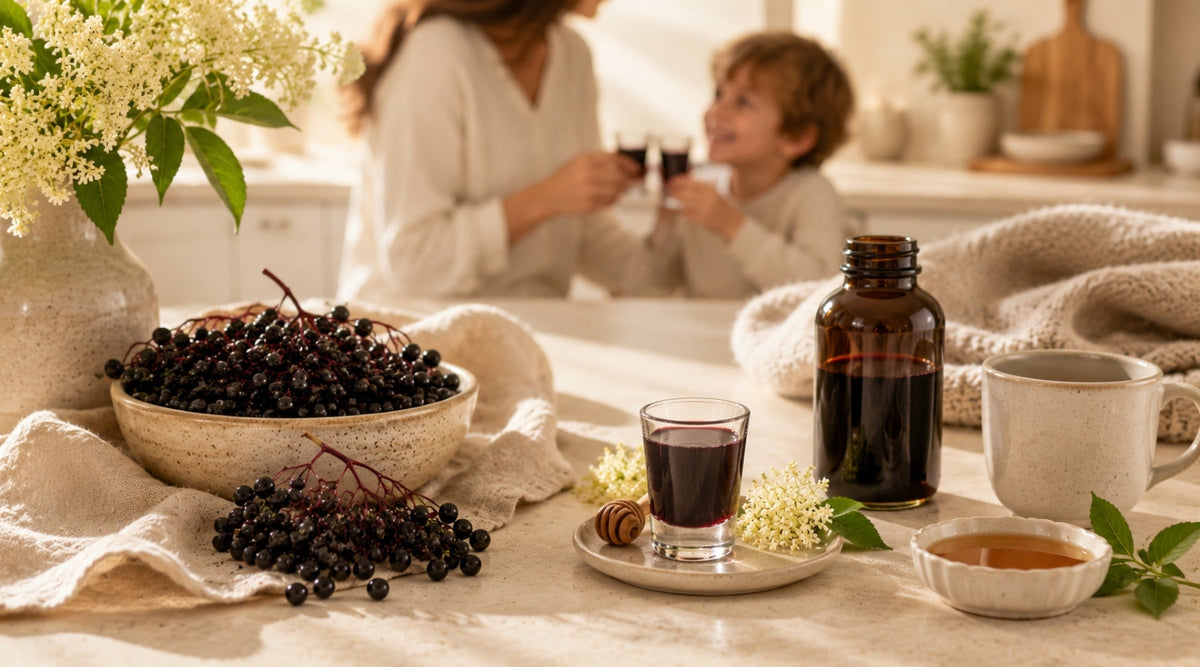
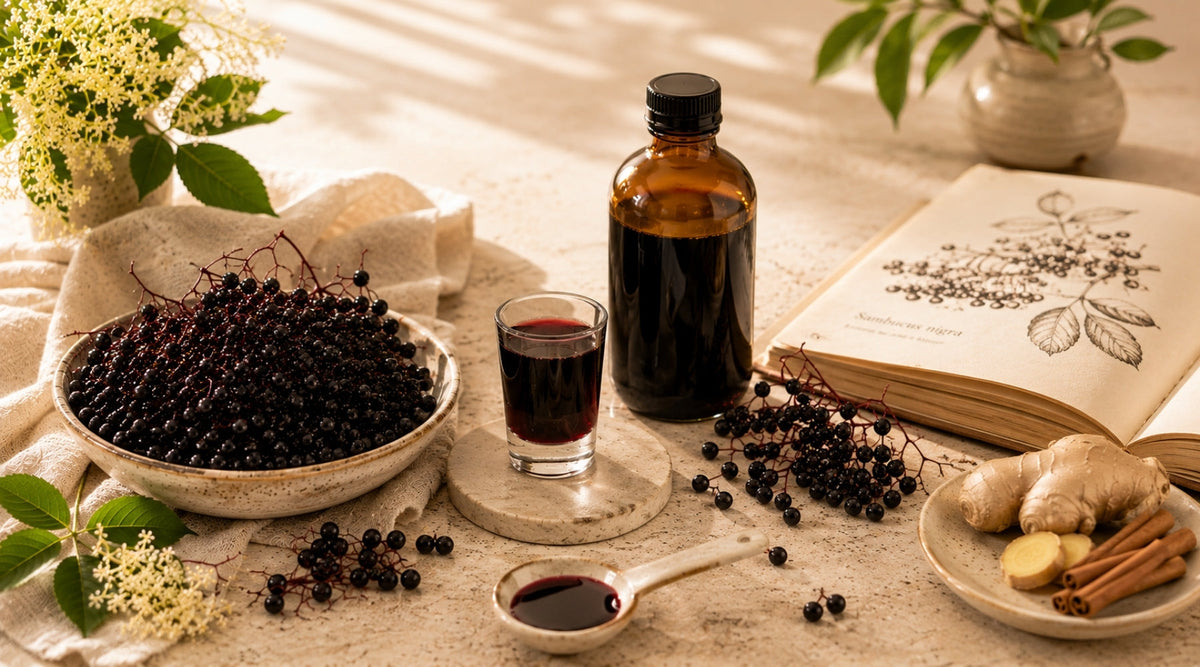
European black elderberry, botanically known as Sambucus nigra, produces clusters of small, deep purple-black berries naturally containing anthocyanins, polyphenols, and other plant compounds. It also has a long history of traditional use and has been studied in modern research involving certain elderberry preparations.
Understanding black elderberry benefits starts with understanding the plant itself, what naturally occurs within the berries, and what research can and cannot tell us about Sambucus nigra.
Here's a closer look.
What Is Black Elderberry (Sambucus Nigra)?
Black elderberry typically refers to the dark berries of Sambucus nigra, a species of elder native to Europe and parts of western Asia and northern Africa.
The plant produces clusters of creamy white elderflowers followed by small berries that ripen from green to a characteristic deep purple-black color.
That color is important. European black elderberries naturally contain pigments called anthocyanins, which are part of a larger family of plant compounds known as polyphenols.
Sambucus nigra has been used in traditional preparations for generations and is also the elderberry species used in a number of modern research studies.
If you'd like to explore the plant, its characteristics, and why variety matters in greater detail, visit Chapter Three: European Black Elderberries in our Complete Guide to Elderberries.

What Makes European Black Elderberry Different?
There are multiple species within the Sambucus genus, and the term “elderberry” doesn't always identify which one a product contains.
Sambucus nigra is commonly called European black elderberry or black elderberry. Other elder species grow in different parts of the world and can differ in botanical characteristics and composition.
This distinction matters when discussing research.
A study conducted using a particular Sambucus nigra preparation doesn't automatically tell us what to expect from every elderberry species or every product labeled “elderberry.”
That's one reason we believe identifying the actual elderberry variety matters when you're comparing products.
Black Elderberry Benefits and Immune Support
One of the most common reasons people seek out black elderberry is immune support.
Certain Sambucus nigra preparations have been studied for their potential relationship with normal immune function and upper respiratory wellness. Some clinical research has also explored elderberry preparations in people experiencing respiratory symptoms.
The findings are interesting, but they need to be interpreted carefully.
Research involving a specific extract, concentration, serving amount, or preparation doesn't establish that every black elderberry syrup, gummy, capsule, or supplement will produce the same result.
Supporting normal immune function is also different from preventing or treating an illness.
For a broader look at the evidence surrounding elderberry and wellness, visit Chapter Four: Potential Benefits in our Complete Guide.
Sambucus Nigra Benefits and Antioxidant Properties
Much of the interest surrounding Sambucus nigra benefits begins with the natural composition of the berries.
European black elderberries contain anthocyanins, the plant pigments responsible in part for their rich purple-black color. They also contain other polyphenols and naturally occurring plant compounds.
Anthocyanins have antioxidant properties. Antioxidants are studied for their role in helping protect cells from oxidative damage caused by free radicals.
This doesn't mean that eating or taking black elderberry guarantees a particular health outcome. It does help explain why the berry's naturally occurring plant compounds continue to attract scientific interest.

What Does Research Say About Black Elderberry?
Research on Sambucus nigra has examined several areas, particularly antioxidant activity, immune function, and upper respiratory symptoms.
Some studies involving specific elderberry preparations have reported reductions in the duration or severity of certain respiratory symptoms. Other research has not found a significant benefit.
A systematic review of elderberry research concluded that elderberry may reduce the duration or severity of some respiratory symptoms, while also emphasizing limitations in the available evidence and the need for additional research.
That distinction is important.
Research does not establish that black elderberry prevents, treats, or cures colds, influenza, or other illnesses. Results from a particular elderberry preparation also shouldn't automatically be applied to every Sambucus nigra product.
For a closer look at this specific question, read Does Elderberry Help With Colds? What Families Should Know.
Black Elderberry and Seasonal Wellness
Black elderberry has become particularly associated with fall and winter wellness routines, but families incorporate elderberry in different ways.
Some choose elderberry seasonally. Others make it part of an everyday wellness routine throughout the year.
Those patterns of use don't establish that one approach is more effective than another. There isn't a scientifically established universal schedule showing that everyone should take black elderberry daily or that regular use produces better results than occasional use.
Instead, the appropriate way to use an elderberry product depends on the particular product, its ingredients, its serving directions, and individual circumstances.
Are All Black Elderberry Products the Same?
No.
Even when two products both say Sambucus nigra or European black elderberry, what is inside can be quite different.
Black elderberry products may be made from:
- Whole elderberries
- Elderberry juice
- Elderberry concentrate
- Dried elderberry powder
- Elderberry extracts
They may also contain different concentrations, additional ingredients, sweeteners, preservatives, or other components.
This matters because the presence of Sambucus nigra alone doesn't make two products equivalent.
It also means that research involving one standardized preparation shouldn't automatically be used to make claims about another.
If you're comparing elderberry products, Chapter Six: Choosing an Elderberry Product explains what to look for beyond the word “elderberry” on the label.
What About Black Elderberry Syrup Benefits?
Black elderberry syrup is one of many ways Sambucus nigra can be incorporated into a wellness routine.
Syrups can vary significantly, though. Some begin with whole elderberries, while others may use juice, concentrate, powder, or extracts. Formulas can also differ in their additional ingredients and preparation methods.
That makes it difficult to make one universal statement about black elderberry syrup benefits.
When choosing a syrup, look beyond the format itself. Consider the elderberry variety, how the product is made, what other ingredients it contains, serving information, and the transparency of the company producing it.
For more on this particular format, read Elderberry Syrup Benefits: What Families Commonly Use It For.
Why We Choose European Black Elderberries
At The POWER of Elderberries®, the variety isn't an afterthought.
We make our Signature Elderberry Syrup with whole organic European black elderberries (Sambucus nigra) rather than elderberry concentrate.
Our small-batch recipe combines purified water, organic European black elderberries, organic ginger root, organic cinnamon sticks, organic whole cloves, and local raw honey.
The raw honey is added only after the elderberry mixture has cooled.
We also don't use refined sugar, artificial sweeteners, dyes, flavoring, fillers, thickeners, or preservatives.
We don't believe those choices mean our product should be assumed to produce the same outcomes seen in research involving other Sambucus nigra preparations. They reflect something simpler: we want families to know which elderberry they're choosing, what's in the bottle, and how it was made.

Is Sambucus Nigra Safe?
Proper preparation matters with elderberries.
Raw or unripe elderberries and other parts of the elder plant can contain cyanogenic glycosides that may cause nausea, vomiting, diarrhea, or other gastrointestinal symptoms. Elderberries intended for consumption should be appropriately prepared.
It's also important to consider the complete ingredient list of any elderberry product.
For example, our Signature Elderberry Syrup contains local raw honey and therefore shouldn't be given to infants younger than 12 months.
If you're pregnant or nursing, take medications, have an underlying health condition, or have questions about giving elderberry to a child, speak with a qualified healthcare professional.
So, What Makes Sambucus Nigra Different?
European black elderberry, or Sambucus nigra, is distinguished by its botanical identity, its naturally occurring anthocyanins and polyphenols, its long history of traditional use, and its role in modern elderberry research.
Potential black elderberry benefits have been explored in areas including antioxidant activity, normal immune function, and respiratory wellness, but the evidence varies by preparation and research question.
That makes knowing what you're buying especially important.
Look for the elderberry species, understand how the product is made, review the complete ingredient list, and remember that research involving one preparation doesn't automatically establish the effects of another.
At The POWER of Elderberries®, that is why we start with the ingredient itself: whole organic European black elderberries, Sambucus nigra.
For an even deeper look at this remarkable elderberry variety, continue with Chapter Three: European Black Elderberries in our Complete Guide to Elderberries.
FDA Disclaimer
These statements have not been evaluated by the Food & Drug Administration. This content is for educational purposes only and is not intended to diagnose, treat, cure, or prevent any disease.