What Is Elderberry Good For? How Families Use It in Everyday Wellness
When people ask what is elderberry good for, they're usually trying to understand what elderberry actually does, why so many families use it, and whether it makes sense as part of their own wellness routine.
Elderberry has been appreciated for generations and continues to be used today as part of everyday and seasonal wellness routines. Many families choose elderberry to support normal immune function, particularly during times of seasonal change.
Understanding what elderberry is and what the research does and does not tell us about its potential benefits can make it much easier to decide whether it belongs in your family's routine.
What Is Elderberry and What Is It Good For?
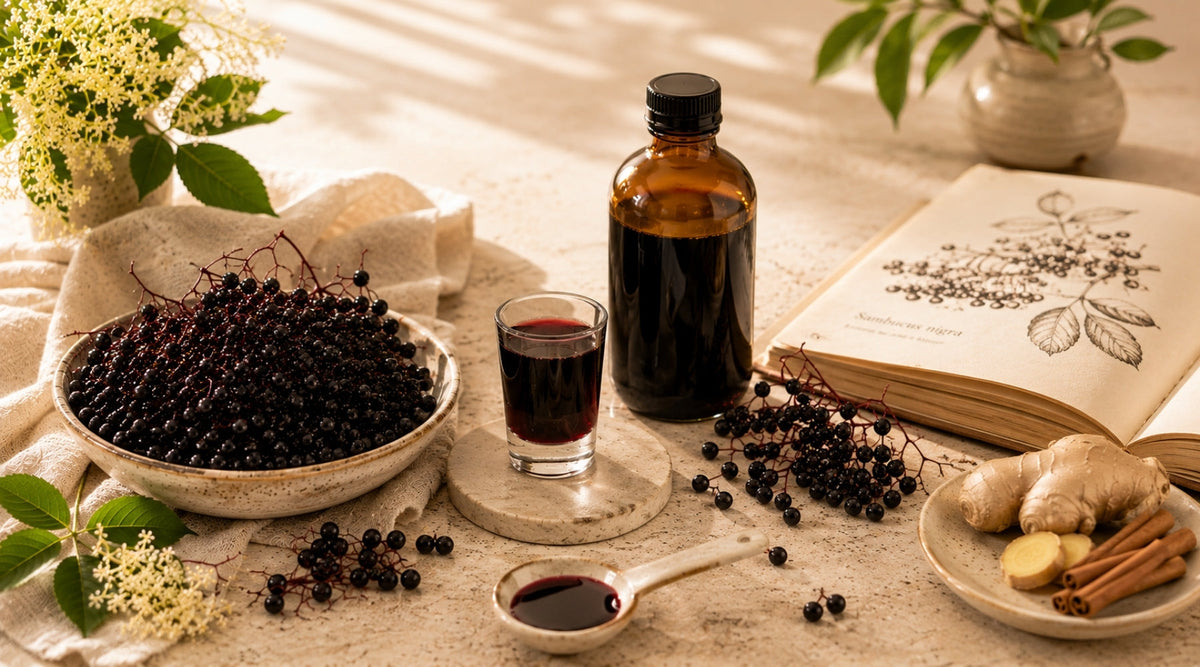
Elderberry comes from the fruit of the elder tree. One of the most widely recognized varieties is European black elderberry (Sambucus nigra), which has also been the focus of much of the modern research surrounding elderberries. Its deep purple berries naturally contain plant compounds called anthocyanins, which have antioxidant properties.
Elderberry is commonly included in wellness routines focused on:
- Supporting normal immune function
- Seasonal wellness
- Building a simple, consistent wellness routine

Is Elderberry Good for You?
Many people wonder, are elderberries good for you?
Elderberries naturally contain anthocyanins and other plant compounds that have been studied for their antioxidant activity and potential role in immune and seasonal wellness. As with any supplement, however, how elderberry is prepared, the ingredients it is combined with, and how it is used all matter.
For families who choose elderberry, it can be incorporated into a daily or seasonal wellness routine according to the directions of the particular product.
Is Elderberry a Good Immune Booster?
One of the most common questions is whether elderberry is good for the immune system.
“Immune booster” is a common phrase, but we prefer to think about elderberry in terms of supporting normal immune function rather than “boosting” the immune system.
Elderberries contain naturally occurring anthocyanins and other plant compounds that have been studied for their antioxidant activity and potential role in immune and seasonal wellness. This is one reason many families choose to include elderberry in their routines, particularly during colder months, travel, back-to-school season, and other times when seasonal wellness may be top of mind.

Is Elderberry Good for Colds and Flu?
Elderberry is not a medicine or a treatment for colds or influenza. However, researchers have studied certain elderberry preparations for their potential role in respiratory and seasonal wellness.
Some studies have reported improvements in the duration or severity of certain upper respiratory symptoms, while other research has found no significant benefit. The evidence remains limited, and findings from one elderberry preparation should not automatically be applied to every elderberry product.
For families who choose to use elderberry during cold and flu season, it can be one part of a broader wellness routine that also includes rest, hydration, nourishing foods, and appropriate medical care when needed. For a closer look at what research has explored, read Does Elderberry Help With Colds? What Families Should Know.
Is Elderberry Good for Other Areas of Wellness?
You may also come across questions about elderberry and heart health, digestion, respiratory wellness, skin health, sleep, blood sugar, and other areas of health.
Research into many of these uses is limited, and we don't believe in stretching the science beyond what it can tell us. Much of the current conversation surrounding elderberry centers on its naturally occurring plant compounds, antioxidant activity, and its potential role in immune and seasonal wellness.
As research continues to evolve, we'll continue to follow it—and distinguish between what has been studied and what has simply become associated with elderberry online.
Is Elderberry Good for Daily Use?
Many families wonder whether elderberry can be taken every day.
Elderberry products are often incorporated into both daily and seasonal wellness routines. There isn't one universal schedule that applies to every elderberry product, however, because formulations, concentrations, ingredients, and serving directions can differ.
The best place to begin is with the directions provided for the specific product you're using. You can learn more in Can Elderberry Syrup Be Taken Daily? If you have questions about whether elderberry is appropriate for you or your child, particularly if there are underlying health conditions or medications involved, speak with a qualified healthcare professional.

What Does Elderberry Do for the Body?
People asking what does elderberry do for the body are often trying to understand the same thing: what makes this little berry so interesting?
Much of that interest comes from elderberry's naturally occurring plant compounds, particularly anthocyanins, which contribute to its deep purple color and have antioxidant properties. Research has also explored elderberry's potential relationship with normal immune function and seasonal respiratory wellness.
There is still more to learn, which is why we believe elderberry is best discussed with both appreciation and perspective.
Choosing the Right Elderberry Format for Your Routine
Elderberry is available in many forms, including syrups, gummies, capsules, powders, extracts, and chewable options. There isn't one format that's right for every family.
Some families prefer liquid syrup for flexible dosing at home, while others appreciate bite-sized options for travel, school, and busy days. Beyond format, it's also worth looking at the elderberry species, preparation method, additional ingredients, serving information, and transparency provided by the manufacturer.
Those details can tell you much more about an elderberry product than the word “elderberry” on the front of the package.
The Takeaway
So, what is elderberry good for?
Elderberry is most commonly associated with immune and seasonal wellness, and its naturally occurring anthocyanins and other plant compounds continue to be studied for their potential health-supporting properties.
What matters just as much is understanding what elderberry cannot promise. Research is still evolving, different elderberry preparations are not interchangeable, and no supplement replaces the foundations of good health or appropriate medical care.
For families who choose elderberry, the goal doesn't have to be complicated: understand what you're taking, choose thoughtfully, follow the product directions, and make it part of a wellness routine that works for your family.
For a deeper look at the plant itself, its history, potential benefits, product forms, and common questions, explore our Complete Guide to Elderberries.
FDA Disclaimer
These statements have not been evaluated by the Food & Drug Administration. This content is for educational purposes only and is not intended to diagnose, treat, cure, or prevent any disease.