What Does Elderberry Do? A Clear Look at Benefits, Antioxidants & Immune Support
When people ask what does elderberry do, they're usually trying to understand more than why elderberry is popular. They want to know what is actually in the berry, how it may interact with the body, and what research can and cannot tell us about its potential benefits.
Elderberries have a long history of traditional use, but today we also have scientific research exploring their naturally occurring plant compounds, antioxidant activity, and potential relationship with immune and seasonal wellness.
There is still much to learn, and not every elderberry preparation is the same. Here's a closer look at what we currently know.
If you're looking instead for the ways families commonly use elderberry in everyday life, you can also read What Is Elderberry Good For?
What Is Elderberry?
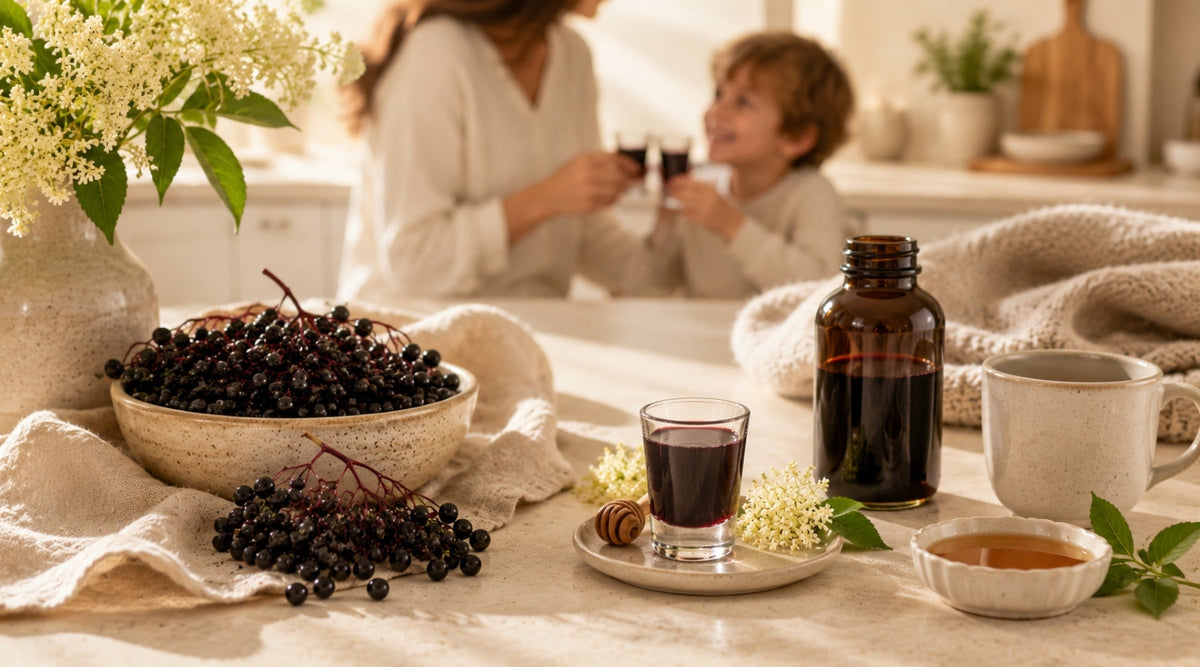
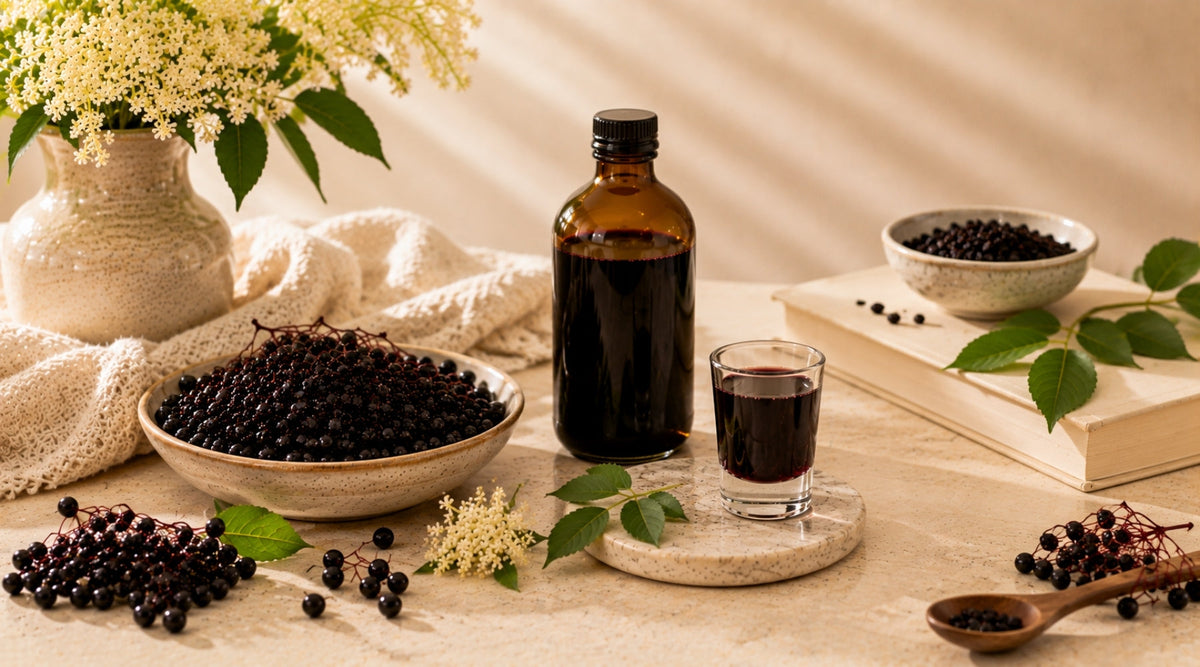
Elderberries are the small, deep-purple fruits of plants in the Sambucus genus. One of the most widely recognized varieties is European black elderberry (Sambucus nigra), which has also been the focus of much of the modern research surrounding elderberries.
Their rich purple color comes in part from naturally occurring plant compounds called anthocyanins. Anthocyanins belong to a larger group of compounds known as polyphenols and are known for their antioxidant properties.
That helps explain why elderberry has attracted interest not only through generations of traditional use, but also among researchers studying its potential relationship with immune and seasonal wellness.
For a deeper introduction to the plant itself, visit Chapter One: What Are Elderberries? in our Complete Guide to Elderberries.

So, What Does Elderberry Do for the Body?
When people ask what elderberry does for the body, or what elderberry does for the human body, much of the answer begins with its naturally occurring plant compounds.
Elderberries contain naturally occurring anthocyanins and other polyphenols with antioxidant activity. Antioxidants help protect cells from oxidative stress caused by free radicals.
Researchers have also explored certain elderberry preparations for their potential effects on immune function and symptoms associated with some upper respiratory illnesses.
However, elderberry research is still evolving. Studies have used different extracts, concentrations, serving amounts, and formulations, which means the results from one elderberry preparation cannot automatically be applied to every elderberry product.
That distinction matters.
Does Elderberry Support the Immune System?
One of the most common questions surrounding elderberry is whether it supports the immune system or “boosts immunity.”
We prefer the phrase supporting normal immune function rather than “boosting” the immune system.
Laboratory and clinical research has explored elderberry and its naturally occurring plant compounds in relation to immune activity and seasonal respiratory wellness. Some clinical studies have reported promising findings, while the overall body of evidence remains limited.
In other words, there is scientific interest behind elderberry. That is different from saying elderberry has been proven to prevent illness or produce the same effect in every person.
We explore several of these studies, including research with differing findings, in Chapter Four of our Complete Guide to Elderberries.

What Does Elderberry Do for Colds?
Elderberry does not treat or cure the common cold or influenza. However, researchers have studied certain elderberry preparations for their potential effects on upper respiratory symptoms.
Some studies have reported reductions in the duration or severity of certain symptoms, while other research has found no significant benefit. Systematic reviews have generally concluded that the evidence is promising in some areas but remains limited and uncertain.
That is why we don't believe in presenting elderberry as a cold or flu remedy.
For families who choose to use elderberry during cold and flu season, it can be one part of a broader wellness routine alongside rest, hydration, nourishing foods, and appropriate medical care when needed.
For a closer look at this research, read Does Elderberry Help With Colds? What Families Should Know.
Does Elderberry Have Antioxidants?
Yes. This is one of the better-established characteristics of elderberries.
Their deep purple color comes largely from anthocyanins, naturally occurring plant pigments with antioxidant properties. Elderberries also contain other polyphenolic compounds that have been studied for their antioxidant activity.
This doesn't mean eating or taking elderberry produces a specific health outcome. It does help explain why researchers continue to be interested in the berry and its potential role in human health.
What About Vitamins and Minerals?
Elderberries themselves contain naturally occurring nutrients, but the nutritional profile of an elderberry supplement depends heavily on how it has been prepared.
A syrup, extract, powder, capsule, gummy, or chewable may contain very different amounts of elderberry along with different additional ingredients.
That's why questions such as does elderberry have iron, magnesium, potassium, or sugar? can't be answered accurately for every elderberry product with a single yes or no. The ingredient list and nutrition information for the specific product matter.
Is Elderberry Scientifically Proven?
Scientific research on elderberry exists, but “scientifically proven” is stronger than the current evidence supports for many of the claims commonly made about elderberry online.
Researchers have studied European black elderberry (Sambucus nigra) for its naturally occurring plant compounds, antioxidant activity, immune-related mechanisms, and potential effects during certain respiratory illnesses.
Some studies have reported promising findings, while others have found little or no significant benefit. Reviews of the research also point to limitations, including small study sizes and differences among elderberry preparations.
We believe the most responsible approach is to follow the research without asking it to say more than it does.
You can explore several of the studies behind these conversations in Chapter Four: Potential Benefits of our Complete Guide to Elderberries.
What Does Elderberry Treat?
Although you may encounter online searches asking what does elderberry treat, dietary supplements are not intended to diagnose, treat, cure, or prevent disease.
Research has explored elderberry in connection with immune function, antioxidant activity, and certain respiratory symptoms, but those areas of study should not be confused with evidence that elderberry treats a medical condition.
If you're experiencing symptoms or have questions about a health condition, speak with a qualified healthcare professional.
Does Elderberry Do Anything?
It's a fair question and one worth answering without hype.
Elderberry isn't simply popular because of tradition. The berries contain identifiable plant compounds, including anthocyanins, with demonstrated antioxidant activity, and elderberry preparations have been the subject of laboratory and clinical research.
At the same time, that doesn't mean every claim associated with elderberry is supported by strong evidence.
Some questions have been studied more than others. Some findings are promising. Others remain uncertain.
For us, appreciating elderberry and being honest about the limitations of the research aren't opposites. Both matter.
Does the Type of Elderberry Product Matter?

Yes. This is an important piece of understanding what elderberry actually does.
Elderberry products can be made from whole berries, concentrates, extracts, powders, or other preparations. They can also contain very different additional ingredients and concentrations.
That makes it difficult to assume that research performed on one standardized elderberry extract will produce identical results when applied to another syrup, gummy, capsule, or chewable.
When choosing an elderberry product, look beyond the word elderberry on the front of the package. Consider the elderberry species, preparation method, additional ingredients, serving information, and transparency from the manufacturer.
You can learn more in Chapter Six: Choosing an Elderberry Product of our Complete Guide.
So, What Does Elderberry Do?
Elderberry contains naturally occurring plant compounds, particularly anthocyanins, that have antioxidant properties. Researchers have also explored certain elderberry preparations for their potential relationship with normal immune function and seasonal respiratory wellness.
But elderberry isn't a medicine, every elderberry product isn't interchangeable, and the research doesn't support every claim you may encounter online.
That's why we believe elderberry deserves both appreciation and perspective.
For families who choose to include it in their wellness routines, understanding what you're taking, choosing thoughtfully, and following the directions for your particular product is a good place to begin.
For a much deeper exploration of the plant, its history, research, product forms, safety, and everyday use, visit our Complete Guide to Elderberries.
FDA Disclaimer
These statements have not been evaluated by the Food & Drug Administration. This content is for educational purposes only and is not intended to diagnose, treat, cure, or prevent any disease.