CHAPTER TWO: THE HISTORY OF ELDERBERRIES
The Complete Guide to Elderberries → Chapter Two
How elderberries have been appreciated across generations.
In This Chapter
Some plants come and go throughout history. Elderberries have remained.
Long before elderberries became a modern wellness ingredient, they were gathered, respected, and woven into everyday life by cultures throughout Europe and beyond. Their story stretches across centuries, connecting traditional herbal practices, seasonal recipes, and generations of families who appreciated the elder tree for far more than its berries alone.
By the end of this chapter, you'll understand:
✓ How long elderberries have been used
✓ Why so many cultures valued elder trees
✓ Traditional culinary and herbal uses
✓ Why history still influences elderberry products today
A Plant With a Long History
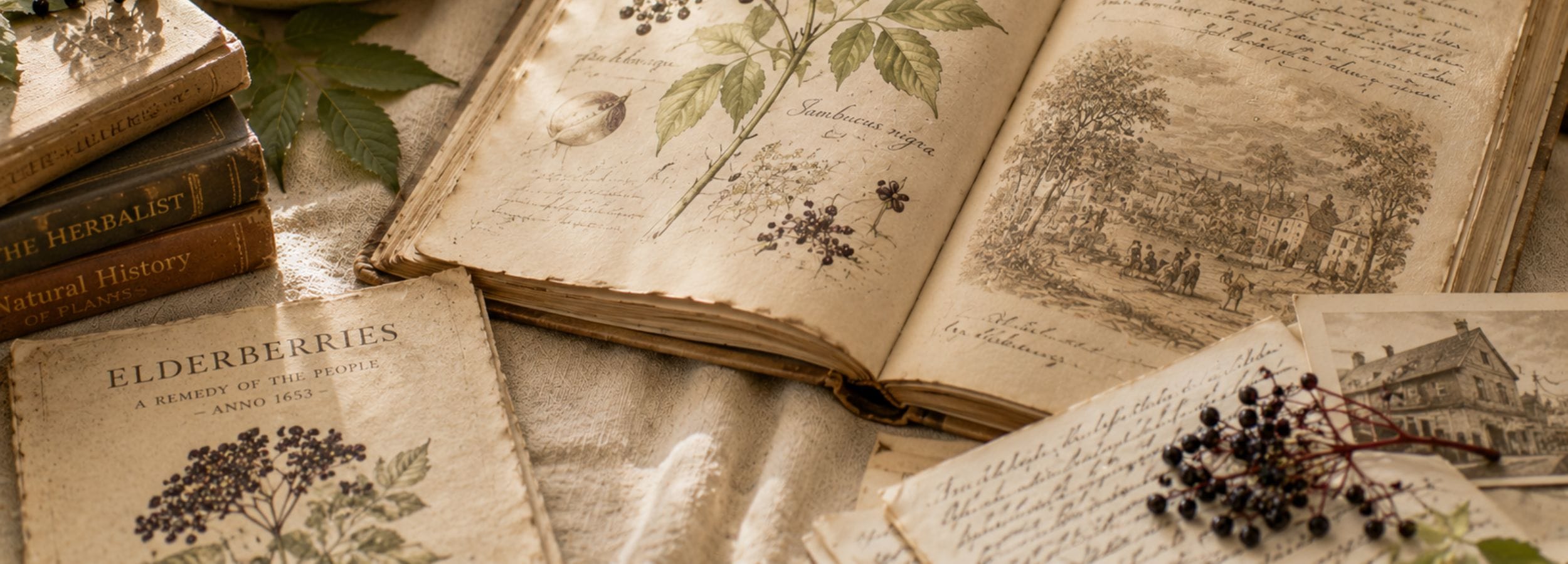
Elderberries have a long history of human use. Archaeological findings and historical records show that elder plants have been known and used across different regions and cultures for centuries, with various parts of the plant serving culinary, practical, and traditional purposes.
Among the many varieties, European black elderberry (Sambucus nigra) became especially well known across Europe. Families harvested the berries late each summer and prepared them in ways that could be enjoyed long after the growing season had ended. Recipes were often passed from one generation to the next, making elderberries part of seasonal traditions rather than simply another wild fruit.
While modern research continues to explore the plant's naturally occurring compounds, its long history of use is one reason elderberries remain so fascinating today.
"Long before elderberries became part of modernwellness conversations, they were already part of family traditions."
More Than Just the Berries
Although elderberries receive most of the attention today, the elder tree has long been appreciated as an entire plant.
Historically, the delicate white blossoms were often used in beverages and culinary preparations. The berries were commonly cooked into syrups, jams, preserves, wines, and seasonal recipes after they had fully ripened. The hollow branches even found practical uses because they were easy to carve into simple tools and musical instruments.
These traditions helped establish the elder tree as one of Europe's most recognizable botanical plants.
It's important to note that while properly prepared ripe elderberries and elderflowers have a long history of culinary use, other parts of the elder plant are not generally intended for casual consumption. Proper identification and preparation matter.
From Tradition to Modern Wellness
Today's interest in elderberries looks different than it did hundreds of years ago, but the underlying appreciation remains surprisingly similar.
Families continue looking for simple ways to incorporate whole-food ingredients into daily routines. Today, elderberries are available in thoughtfully prepared syrups, gummies, teas, powders, capsules, and other forms designed to fit modern lifestyles.
At the same time, scientific interest has grown alongside traditional appreciation. Researchers continue studying the naturally occurring compounds found in European black elderberries to better understand the plant that has captured attention for centuries.
History and modern research now work together, offering a richer understanding of why elderberries continue to be valued today.
Why History Matters Today
Understanding the history of elderberries helps explain why quality matters.
Not every elderberry product reflects the same traditions, ingredients, or preparation methods. As elderberries have become increasingly popular, products have evolved in many different directions.
Knowing where elderberries came from helps us ask better questions today:
- Which variety is being used?
- How was it prepared?
- What ingredients were added?
- Does the manufacturer clearly explain its ingredients and preparation methods?
History doesn't simply tell us where elderberries came from—it helps us make more informed choices moving forward.
A Note from Jessica
One of my favorite things about elderberries is realizing that we're participating in something much older than ourselves.
When I prepare our elderberry syrup, I often think about the generations before us who gathered elderberries each season and carefully transformed them into something their families could enjoy. While our methods today follow modern food safety standards and our own carefully developed recipe, there's something incredibly meaningful about continuing a tradition centered around caring for the people we love.
— Jessica Lowery, M.A.T.
Founder, The POWER of Elderberries®
Continue Learning
Want to explore these topics in greater depth? These related articles expand on concepts introduced throughout this chapter.
Related Articles
- What Are Elderberries?
- European Black Elderberries: Why Sambucus nigra Matters
- Elderberry Benefits: What's Commonly Used For & How Families Incorporate It Daily
- Which Elderberry Is Best for Immune Support? A Simple Guide for Choosing Wisely
Looking for all educational articles? Browse the complete article library.
Continue Reading
Continue your journey through The Complete Guide to Elderberries.