Elderberry Benefits: What It’s Commonly Used For & What Research Tells Us
Elderberries have a long history of traditional use, but today they're also the subject of growing scientific interest. So what do we actually know about elderberry benefits?
European black elderberries (Sambucus nigra) naturally contain anthocyanins, polyphenols, and other plant compounds that have been studied for their antioxidant properties. Researchers have also explored certain elderberry preparations in connection with immune function and upper respiratory wellness.
But there is an important distinction between what elderberries contain, what researchers have studied, and what any particular elderberry product can be expected to do.
Here's a closer look at the potential benefits of elderberry and where the evidence still has limitations.
What Are the Main Potential Benefits of Elderberry?
Research and traditional use surrounding elderberry have focused primarily on several areas, including:
- Immune function
- Antioxidant activity
- Seasonal and respiratory wellness
- A healthy inflammatory response
- General wellness routines
That doesn't mean elderberry has been proven to prevent illness or produce each of these outcomes in everyone.
Studies vary considerably in the elderberry preparation used, serving amount, population, and outcome being measured. That's why understanding the evidence requires looking beyond broad claims about “elderberry benefits.”
For an introduction to the berry itself, start with Chapter One: What Are Elderberries? in our Complete Guide to Elderberries.

Elderberry Benefits for Immune Support
Immune support is probably the benefit most commonly associated with elderberry.
Researchers have studied European black elderberry and certain elderberry preparations for their potential relationship with normal immune function and seasonal respiratory wellness.
However, supporting immune function isn't the same thing as preventing someone from becoming sick, and elderberry shouldn't be considered a treatment for an infection or illness.
It's also important to remember that the immune system is influenced by many factors, including sleep, nutrition, physical activity, stress, and overall health.
Elderberry can be viewed as one part of a broader wellness routine rather than a substitute for those fundamentals.
Antioxidants in Elderberries
One of the most interesting characteristics of elderberries is their naturally deep purple color.
That color comes in part from plant pigments called anthocyanins, which belong to a larger family of plant compounds known as polyphenols.
Anthocyanins have antioxidant properties. Antioxidants are studied for their role in helping protect cells from oxidative damage caused by free radicals.
Elderberries aren't the only foods containing these compounds. Berries, colorful fruits, vegetables, and other plant foods can also contribute antioxidants to the diet.
This is one reason we prefer to talk about elderberry as a whole-food ingredient rather than portraying it as a miracle ingredient.
What About Elderberry During Cold and Flu Season?
This is where elderberry research gets particularly interesting, and it's also where careful language matters.
Several clinical studies have evaluated specific elderberry preparations in people experiencing upper respiratory symptoms. Some reported reductions in symptom duration or severity, while other research has not found a significant benefit.
A systematic review of elderberry research concluded that elderberry may reduce the duration or severity of some respiratory symptoms, but the evidence remains uncertain and additional research is needed.
Those findings don't establish that elderberry prevents, treats, or cures colds or influenza.
They also don't mean that results from one particular extract or preparation can automatically be applied to every syrup, gummy, capsule, or elderberry product on the market.
For a deeper look specifically at this question, read Does Elderberry Help With Colds? What Families Should Know.
Elderberry and a Healthy Inflammatory Response
Researchers have also explored elderberries and their naturally occurring plant compounds in relation to inflammatory processes in the body.
This area of research is different from saying that elderberry “treats inflammation.”
Inflammation is a normal biological process, and claims about treating inflammatory diseases or conditions go well beyond what should be concluded from research on elderberry.
A more accurate way to describe this area is that elderberry's naturally occurring plant compounds continue to be studied for their potential relationship with a healthy inflammatory response.

Are There Proven Elderberry Benefits for Everyone?
No, and this is an important part of understanding elderberry.
There isn't one standardized elderberry product used across all research. Different studies may evaluate:
- Different elderberry species or varieties
- Extracts rather than whole-berry preparations
- Different concentrations
- Different serving amounts
- Different lengths of use
- Different populations
That makes broad statements such as “elderberry does X” much less precise than they may initially sound.
Research involving one preparation doesn't necessarily establish that another elderberry product will produce the same result.
If you'd like to understand the research more closely, we've gathered it in Chapter Four: Potential Benefits of our Complete Guide to Elderberries.
Why Do Families Still Choose Elderberry?
Scientific research is only one part of elderberry's story.
Elderberries have been used in traditional wellness practices for generations, and today many families continue to incorporate elderberry into everyday or seasonal routines.
Some use it consistently throughout the year. Others reach for elderberry more often during seasonal changes, travel, back-to-school months, or other times when wellness is particularly top of mind.
That doesn't prove a particular health outcome. It simply reflects the different ways elderberry continues to be used as part of modern wellness routines.
If you're wondering what people commonly use elderberry for, our article What Is Elderberry Good For? explores that question in more detail.
Do Different Elderberry Products Offer the Same Benefits?
Not necessarily.
The word “elderberry” on the front of a package doesn't tell you everything about what's inside.
Products may be made from:
- Whole elderberries
- Elderberry juice or concentrate
- Dried powders
- Extracts
- Different elderberry species or varieties
They may also contain very different additional ingredients and concentrations.
That's why we don't think research involving a specific elderberry preparation should automatically be used to make claims about every elderberry product.
For help comparing products, visit Chapter Six: Choosing an Elderberry Product in our Complete Guide to Elderberries.
What Makes Our Approach to Elderberry Different?
At The POWER of Elderberries®, we start with whole organic European black elderberries (Sambucus nigra) rather than elderberry concentrates.
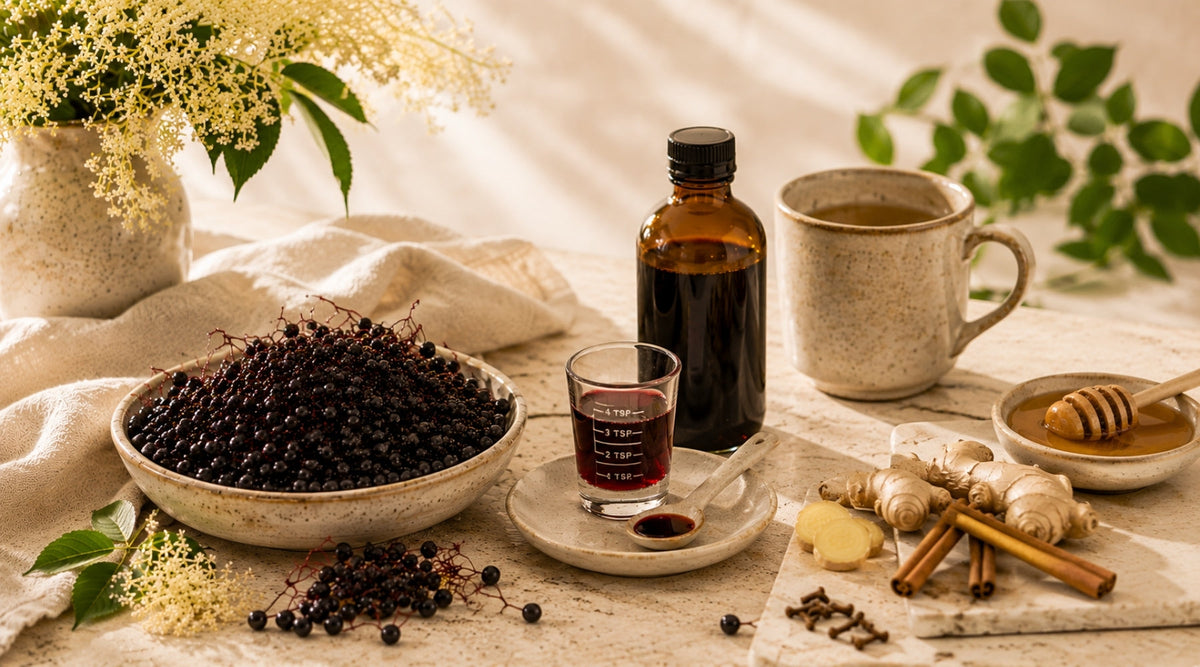
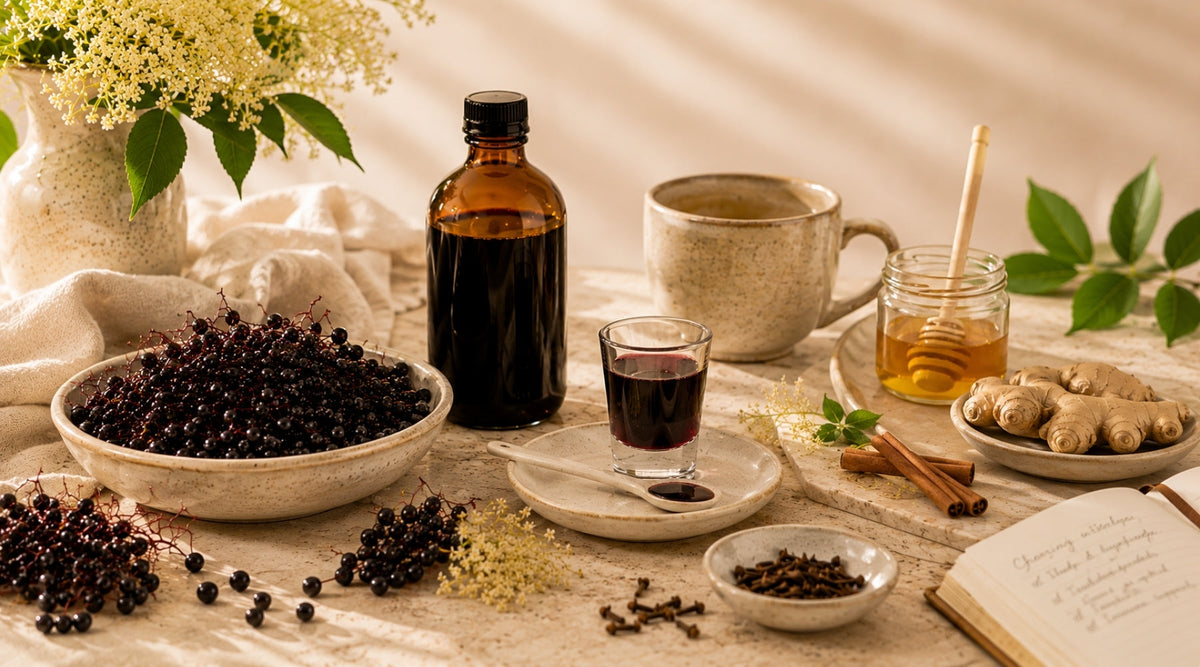
Our Signature Elderberry Syrup is handcrafted in small batches with purified water, local raw honey, organic elderberries, organic ginger root, organic cinnamon sticks, and organic whole cloves.
We add our local raw honey only after the elderberry mixture has cooled, and we don't use refined sugar, artificial sweeteners, dyes, flavoring, fillers, thickeners, or preservatives.
That doesn't mean our preparation should be assumed to produce the same outcomes observed in studies involving other elderberry preparations. It simply means we believe families deserve to know what they're taking and how it was made.

Are There Any Elderberry Safety Considerations?
Proper preparation matters with elderberries.
Raw or unripe elderberries and other parts of the elder plant can contain cyanogenic glycosides that may cause nausea, vomiting, diarrhea, or other gastrointestinal symptoms. Commercial elderberry products should be appropriately prepared according to their intended use.
Individual products can also contain additional ingredients that have their own considerations. For example, our Signature Elderberry Syrup contains local raw honey and therefore shouldn't be given to infants younger than 12 months.
If you're pregnant or nursing, take medications, have an underlying health condition, or have questions about using elderberry for a child, speak with a qualified healthcare professional.
So, What Are the Benefits of Elderberry?
Elderberries contain naturally occurring anthocyanins, polyphenols, and other plant compounds with antioxidant properties. Research has also explored certain elderberry preparations for their potential relationship with immune function, respiratory wellness, and a healthy inflammatory response.
But the evidence doesn't support treating elderberry as a cure-all.
Different elderberry preparations aren't interchangeable, research is still evolving, and some areas have considerably more evidence than others.
At The POWER of Elderberries®, we believe the most useful approach sits somewhere between dismissing elderberry altogether and promising more than science can support: understand the ingredient, understand the research, and make informed choices for your family.
For a deeper exploration of the science, research, and limitations behind these potential benefits, continue with Chapter Four: Potential Benefits in our Complete Guide to Elderberries.
FDA Disclaimer
These statements have not been evaluated by the Food & Drug Administration. This content is for educational purposes only and is not intended to diagnose, treat, cure, or prevent any disease.